Last Mile Delivery Challenges and Solutions for Big and Bulky Items
Published by Professional Moving Solutions
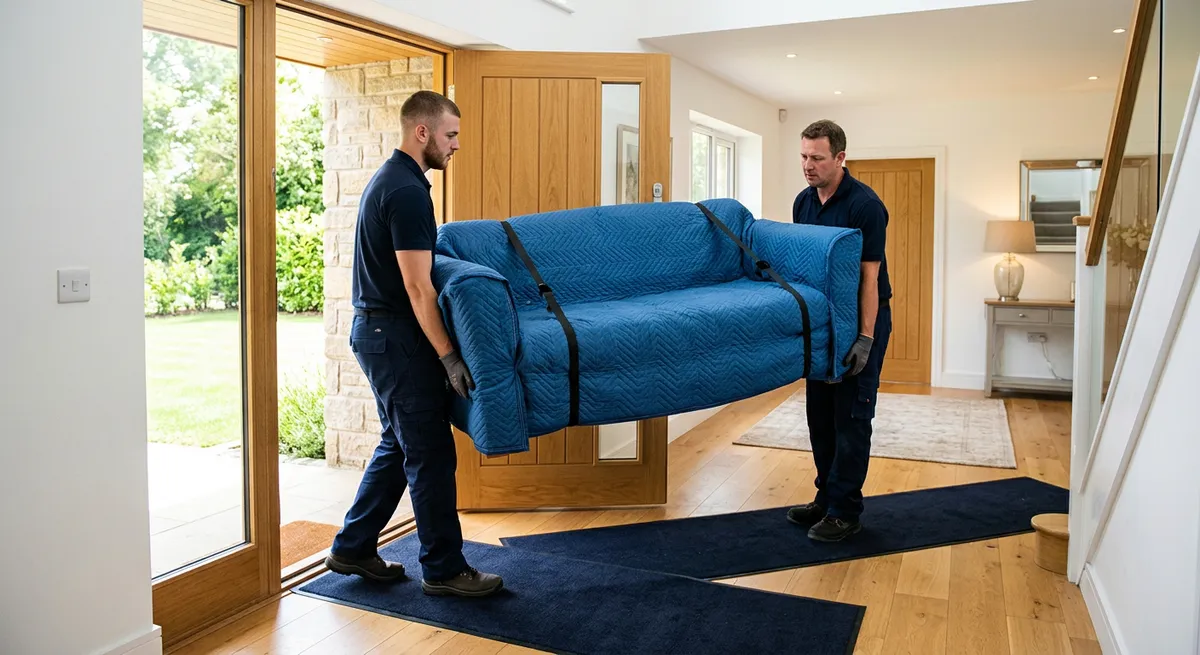
The last mile is where a good order turns into a good experience, or a bad one. It is also where most delivery problems show up: a customer who is not home, a stairwell nobody mentioned, a sofa that will not turn the corner. None of them are rare, and all of them cost money.
This guide walks through the most common last mile delivery challenges for big and bulky items and the practical fixes that work, so you can spot the weak points in your own delivery process.
The six biggest last mile delivery challenges
1. Failed and missed deliveries
Parcels can be left on a porch. A dresser, washer or treadmill cannot. If nobody is there to accept it, the crew has driven the route for nothing, and the item needs another trip, another crew and another conversation with the customer. Missed deliveries are one of the largest hidden costs in the final stretch.
2. Access problems nobody planned for
Third-floor walk-ups, small elevators, narrow hallways, tight turns, gated communities and loading dock rules all change how long a delivery takes and whether an item fits at all. The problem is usually not the item. It is that nobody measured the path before the day.
3. Damage in handling
Every extra touch is a chance for a scuffed leg, a scratched floor or a dented corner. Damage turns into a return, a replacement, a second delivery and often a lost customer. Careless handling is expensive even when it looks fast.
4. Delivery windows that do not fit real life
Customers want to know when to be home. Wide windows frustrate them, and tight ones are hard to keep across a full delivery route with traffic, parking and slow stops. The gap between what was promised and what happens is a major source of complaints.
5. The cost of many separate stops
Earlier legs of the trip move a lot of freight to one place at once. The last mile splits that freight into many stops, each with its own address, parking and unloading time. Two people at every stop for large items only raises the total cost. Our guide to what last mile delivery is and why it costs the most breaks this down.
6. Rural areas and dense urban areas
Long drives between rural stops and slow, congested streets in urban areas create opposite problems with the same result: fewer deliveries per day and a harder route to plan. Parking, building rules and limited loading access add more friction in cities.
Practical solutions that work
Confirm the day, then call ahead
Agree on a delivery day with the customer before the truck is loaded, and have the crew call ahead on the day. This one habit removes most missed deliveries, because a confirmed person at the address is what a large item needs.
Collect access details up front
Ask for the floor, elevator, stairs, parking, gate codes and any building delivery rules when the order is placed. A short checklist at that step is far cheaper than a failed trip. If the path is unusual, say so before pickup so the crew can plan or add help.
Match the service level to the product
Not every item needs the same service. Curbside, threshold, room of choice and white glove each go a step further. Choosing the right one avoids paying for work you do not need, or skipping work the customer expects. The difference is covered in curbside vs threshold vs room of choice vs white glove.
Use trained two-person crews
Large items need two people, planning before the lift, and floor and wall protection. Crews who do this every day damage less and finish faster than a driver working alone, which keeps the total cost down.
Inspect with the customer
Having the customer look the item over at delivery, and recording photo proof of delivery, catches issues while the crew is still on site and settles questions about condition later.
Keep storage and delivery together
Holding product with your delivery partner removes a handoff and lets deliveries be scheduled when the customer is ready. See warehousing and rollouts for how that works.
Plan for returns
Large items do come back. Having a plan for pickups, haul-away and disposal keeps one problem from becoming two. Our reverse logistics service covers returns, haul-away and disposal.
A quick checklist to find your weak points
- Is the delivery day confirmed with the customer before the truck leaves?
- Do you collect floor, elevator, stairs and parking details at order time?
- Does every large item go out with a two-person crew?
- Is the service level matched to each product, not one-size-fits-all?
- Does the customer inspect the item at delivery, with photo proof recorded?
- Is there a plan for damage, refusals and returns?
If you answered no to more than one, that is where your last mile is losing money. Fix those first.
Choosing a partner for the final stretch
The crew at the door represents your business. Look for background-checked, drug-screened drivers and helpers, two-person crews, call-ahead scheduling, inspection with the customer and nationwide coverage so every market is served the same way.
Professional Moving Solutions offers all of this through our last mile delivery service, with white glove delivery when the job needs unpacking, assembly and debris removal. Retailers can see store and online order delivery on our delivery for retailers page.
Frequently asked questions
What are the biggest last mile delivery challenges?
The most common are failed or missed deliveries, difficult access (stairs, elevators, narrow doorways, tight parking), delivery windows that customers cannot keep, damage in handling, and the cost of running many separate stops. Large items add the need for a two-person crew at every address.
How do you reduce failed last mile deliveries?
Confirm the delivery day with the customer in advance, have the crew call ahead on the day, and collect access details (floor, elevator, parking, gate codes) before the truck leaves. Large items cannot be left on a porch, so a confirmed person at the address matters most.
Why is last mile delivery harder for large items?
A parcel needs one driver and a doorstep. A sofa, refrigerator or treadmill needs two people, a planned path through the building, floor and wall protection, and often unpacking, assembly and debris removal. Each of those adds time and risk at every stop.
What is the best way to prevent damage at the door?
Use trained two-person crews, protect the item and the building, plan the carry path before lifting, and inspect the item with the customer at delivery. Photo proof of delivery records the condition on arrival.
Do you offer last mile delivery nationwide?
Yes. Professional Moving Solutions delivers big, bulky and high-value items nationwide with two-person crews, call-ahead scheduling and photo proof of delivery.
Get a free last mile delivery estimate
Send us your item types, pickup location and delivery areas through the quote form for a free, no-obligation estimate, or call 1-866-216-7742, 24 hours a day, 7 days a week.
See more deliveries like this on our Facebook page (opens in a new tab)